

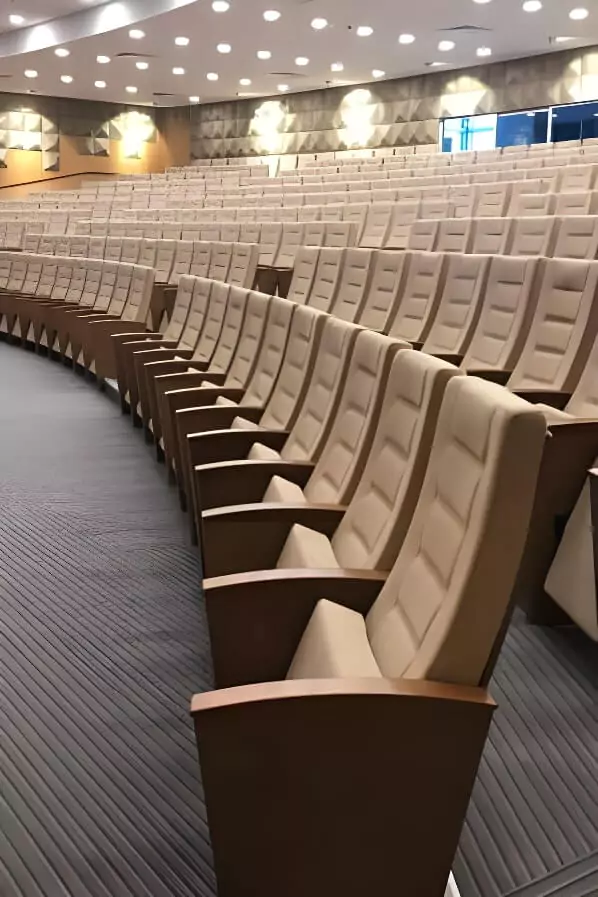
Seating as Part of Everyday Europe
Seating in Europe is rarely dramatic. It does not try to announce itself or redefine the space it occupies. Instead, it settles in quietly, becoming part of daily life in offices, public buildings, cultural venues, and shared environments. This understated presence is not accidental. It reflects a long standing relationship between people and space.
Across Europe, seating is expected to work first and speak later. Its value is measured over time, through repeated use and gradual familiarity rather than immediate impact.
Spaces Designed to Be Shared
European spaces are often built with collective use in mind. Whether in a municipal hall, a workplace, or a cultural venue, seating supports interaction without encouraging disorder.
Chairs are positioned to create balance. They allow people to gather while maintaining personal boundaries. This balance helps shared spaces remain calm, even when they are busy. Seating becomes a tool that quietly shapes behavior without imposing rules.
The result is a space that feels usable rather than staged.
Comfort That Respects Posture
In many European environments, seating comfort is carefully moderated. The goal is not to create a sense of luxury, but to support the body in a natural, sustainable way.
Seating that encourages good posture allows people to remain attentive without strain. It supports long conversations, focused work, or attentive listening without drawing attention to itself. Over time, this kind of comfort becomes familiar rather than noticeable.
The chair does not invite collapse. It supports presence.
Visual Calm in Built Environments
European interiors often favor visual calm over expression. Seating follows the same principle. Repetition, proportion, and alignment matter more than bold forms.
When seating is visually restrained, the space feels coherent. The eye moves through the room without interruption. Architecture, light, and activity take precedence. Seating plays its role by reinforcing order rather than competing for attention.
This restraint is what allows seating to fit into many different contexts without feeling out of place.
Designed for Repetition and Routine
Seating in Europe is rarely selected for a single moment. It is chosen for daily routines, repeated meetings, and long term use. This reality shapes how seating is designed and evaluated.
A chair that feels acceptable only briefly does not meet expectations. European seating culture values consistency. The chair should feel the same on the hundredth use as it did on the first. Reliability becomes part of trust.
Over time, seating that performs consistently fades into the background of daily life.
Materials That Age Quietly
How a seat ages matters. In European contexts, wear is expected, but sudden failure or rapid decline is not.
Materials are chosen for how they behave over time. Surfaces that remain stable, structures that do not loosen, and finishes that age evenly all contribute to long term satisfaction. Seating is expected to remain usable and presentable without constant intervention.
A chair that ages quietly maintains the integrity of the space around it.
Adaptation Without Excess Change
European spaces often evolve gradually. Offices are reorganized, venues host new types of events, public spaces are reused. Seating must adapt without constant replacement.
This adaptability comes from simplicity and proportion rather than complexity. When seating is well balanced, it can serve different purposes without feeling inadequate or outdated. The chair remains relevant because it was never overly specific to begin with.
Flexibility is achieved through restraint.
Daily Use as the True Measure
Seating reveals its quality through everyday use. People sit down without thinking. Meetings begin on time. Spaces remain orderly without effort.
When seating performs well, it does not become a topic of discussion. There are no adjustments to explain, no complaints to address, no workarounds to invent. The chair simply supports what needs to happen in the space.
This absence of friction is the clearest sign of success.
Seating That Becomes Part of the Place
Over time, seating in European environments becomes part of the place itself. It blends into routines, habits, and expectations. People remember the space, the activity, or the interaction, not the chair.
This is not a loss of identity. It is a fulfillment of purpose. Seating that integrates so completely has done exactly what it was meant to do.
Where Continuity Matters Most
European seating culture values continuity. Spaces are meant to last, and the elements within them are expected to support that longevity.
When seating is designed with this mindset, it remains present without being prominent. It supports daily life quietly, consistently, and without interruption. In doing so, it reflects a broader European approach to shared environments: thoughtful, measured, and built to endure.
Created By : Monseat